Partial or complete loss of vision – Amaurosis
Partial or complete loss of vision – Amaurosis
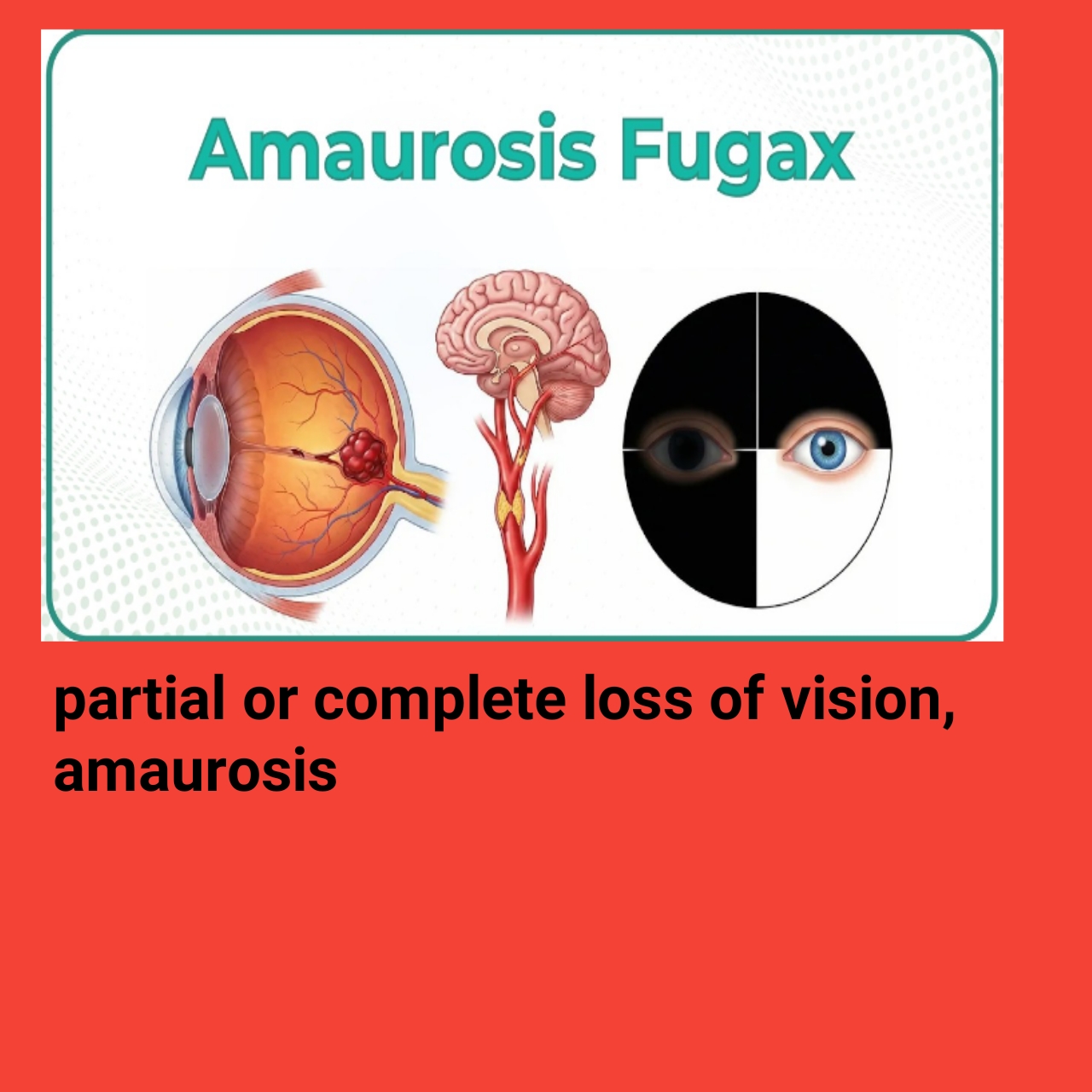
Amaurosis is a medical term that refers to partial or complete loss of vision without any visible external or structural damage to the eye. In this case the cause of vision loss is not inside the eye; Rather, it is caused by a problem in the optic nerve, retina, or pathways in the brain involved in vision.
Common types of amaurosis:
• Amaurosis Fugax: This is a painless condition in which vision in one or both eyes is temporarily lost. It is caused by a temporary decrease in blood flow to the retina (ischemia) or a small blood clot. This often serves as a warning sign or 'transient ischemic attack' (TIA), which can increase the risk of a future stroke.
The eyes feel swollen and protruding; Vision steady and bright; conjunctiva red; Eyes dry and irritated; intolerance to light (photophobia); Pinching pain in eye. Double vision (diplopia), blurred vision, eyelid twitching. Eyes seem to be half closed. Swollen eyelids. The inner part of the eye (fundus) is congested. — Belladonna
Eyes and eyelids are red and inflamed. Pain in the eyes as if someone was pulling them inside the head. Piercing pain in the bones above the eyeball. Touching the eyeball causes pain. Objects appear red and unusually large. Blurred vision while reading; The range of vision is reduced by half. Bright circles appear in front of the eyes. Hepar Sulfur
intolerance to light; The problem gets worse in the morning. Burning and dry feeling in the inner corners of the eyes (inner canthi). Neuralgia, with watery eyes. Loss (atrophy) of the optic nerve as a result of chronic drug use. Partial paralysis of eye muscles (paresis); The condition worsens with the consumption of tobacco or stimulants. Spasms in the muscles of the eyeballs that spread to the back of the head (occiput). Inflammation of the optic nerve (optic neuritis). — Nux vom
Cataract. Everything seems to be covered with fog, veils or dust, or partial loss of vision due to excessive use of some tobacco hard on the eyes. Pain in the bones of the eyeball. Partial paralysis of extraocular muscles. Double vision (diplopia) due to deviation of the visual axis. Loss of vision (amaurosis) due to excessive sexual habits. Glaucoma. Blood clots in retinal blood vessels and degenerative changes in retinal cells. Degenerative changes where pain and crooked lines appear in the elderly. Retinal problems and hallucinations in light. - Phos
Constricted eyeballs. Inflammation of the optic nerve. Glaucoma, especially if caused by spinal cord injury. Optic neuritis, central scotoma. Painful loss of vision after loss of consciousness. - Plumbum
blurred vision; Like seeing through a veil; Strabismus. Amaurosis; restless face Central scotoma. Rapid blindness without lesions, followed by venous hemorrhage and optic nerve atrophy. - Tabacum